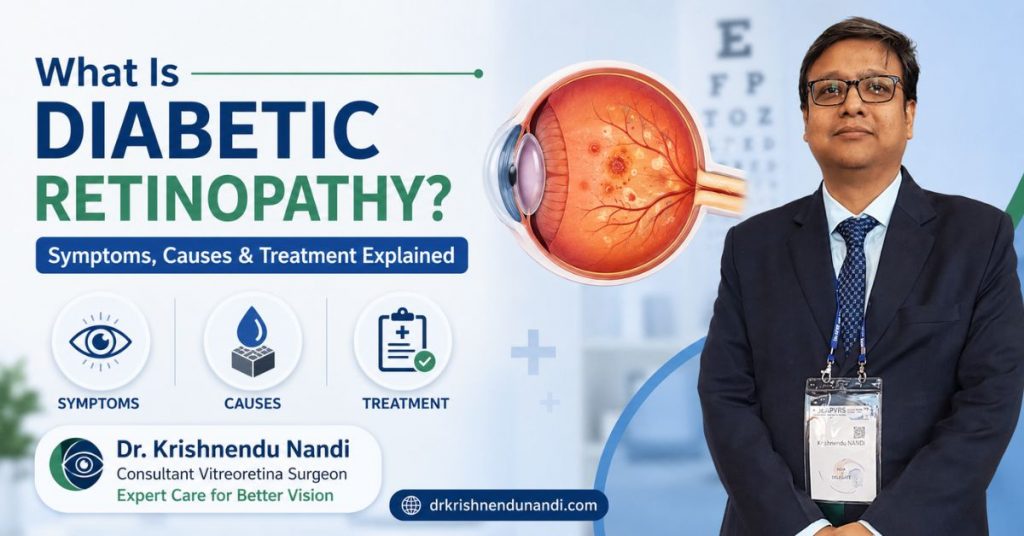
Diabetic retinopathy is a frequent eye disease found in diabetics. It takes a long time to develop, and can affect the tiny blood vessels at the back of your eye, where vision happens. If left untreated, it can cause vision loss and even blindness.
Early diagnosis, and frequent eye examinations are the key to avoid complications, says Dr Krishnendu Nandi. The main problem with this condition is that people don’t notice the symptoms initially, so it goes undiagnosed until it’s advanced.
Your retina is the thin layer of tissue at the back of your eye which detects light and passes on information to the brain. For diabetics, fluctuating blood sugar levels can cause the blood vessels in the retina to change.
These blood vessels can become swollen, leak or shut down. Sometimes new blood vessels can form, worsening the vision. This occurs over time, so it is recommended to monitor vision.
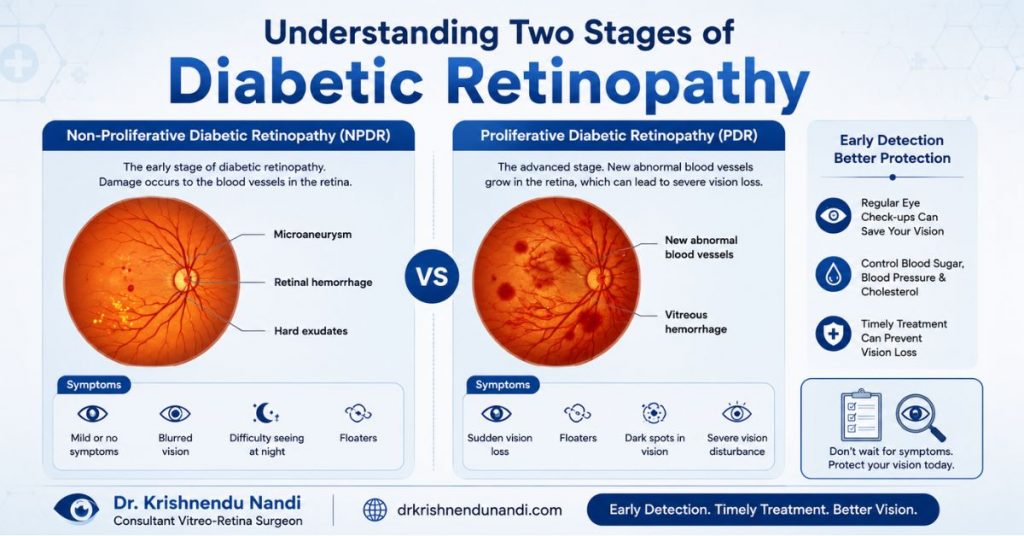
There are two types of this condition.
The first one is known as non-proliferative diabetic retinopathy (NPDR). This is when the blood vessels are weak and can leak blood or fluid. It may not cause vision problems or only cause minor vision problems.
Next is proliferative diabetic retinopathy (PDR). This is more serious. There is new growth of abnormal blood vessels in the retina. These can leak, resulting in serious loss of vision.
Knowing these stages will guide doctors like Dr Krishnendu Nandi on when to treat the disease.
The problem with diabetic retinopathy is that symptoms may not show up until it’s too late. It may not affect your vision until it’s advanced.
As the condition progresses, you may have blurry vision or problems with reading or seeing clearly. You may also notice dark floaters or spots in your vision. There could also be a loss of vision.
Other symptoms include difficulty seeing in the dark and blurred colours. If you have any of these symptoms, it is recommended to seek urgent diagnosis from an eye doctor.
High blood sugar levels over time is the primary cause of diabetic retinopathy. If diabetes is not carefully managed, this can affect the blood vessels throughout the body, including in the eyes.
Other factors can increase the risk. Wear and tear from high blood pressure and high cholesterol make it worse. And smoking can cause damage to blood vessels.
The risk of this eye disease increases with time for people with diabetes. This is why it’s important to seek early treatment and have regular eye exams.
Diabetic retinopathy can be caused by either type 1 and type 2 diabetes. It’s more likely to happen if diabetes is poorly controlled.
There may also be an increased risk for pregnant women with diabetes. In this case, Dr Krishnendu Nandi will suggest relevant eye tests.
It is important that you know that initially, you might not notice any changes at first. However, this does not mean you are out of danger. So, trust the doctor.
There are easy tests used by eye doctors to diagnose diabetic retinopathy. One such test is a dilated eye examination, In which a special eye drop will be put inside your eye to dilate it. This enables the doctor to see the retina.
Retinal imaging tests can also be done to get high-resolution images of your retina and look for damage. These tests are not painful and aid in detection.
As Dr Krishnendu Nandi frequently points out, early detection can save sight.
Treatment will vary depending on the stage of the disease. In the early phases, managing blood sugar, blood pressure and cholesterol will help to slow the disease.
In more severe cases, treatment might be required. Laser treatments can be used to seal leaking blood vessels and stop the blood from leaking.
Eye injections can decrease swelling and prevent new blood vessel formation. In some cases, surgery may be needed to drain blood or remove scar tissue.
Treatment will not only restore vision but also stop it from deteriorating.
It can’t always be prevented completely, but you can minimise your risk by controlling your diabetes. It’s important to keep your blood sugar levels within a healthy range.
Exercise, good nutrition and no smoking will also benefit your eyes. It’s also important to keep blood pressure and cholesterol in check. Most of all, don’t neglect your eye doctor appointments. Even if you don’t notice anything, the changes can only be seen by a doctor.
Schedule Your Appointment Today:-
Diabetic retinopathy is a serious but treatable disease. Most people ignore eye health and just keep an eye on their blood glucose levels, but eye health is linked to glucose.
It’s important to recognise the symptoms, causes and treatment options to keep your eyes healthy. Regular check-ups, a healthy lifestyle and diabetes control will keep your eyes healthy. Dr Krishnendu Nandi says the key to prevention is awareness. If you are diabetic, prioritise eye care. By making small changes now, you’ll prevent serious complications later and enjoy good vision for years.