One of the Retinal detachment is a serious eye disease that requires immediate treatment. It can begin with minor symptoms and, if untreated, can cause permanent loss of vision.
As per Dr Krishnendu Nandi, early diagnosis is of paramount importance, as timely intervention can often prevent vision loss. Knowing what symptoms are associated with it can help you get medical attention before it gets worse.
The retina is a thin tissue found in the back of the eye that enables you to see. It is able to receive light and pass information to the brain to form images correctly.
Retinal Detachment occurs when a layer of the retina detaches from the eye. From that point, the retina will not function properly, and vision will begin to deteriorate.
This is a medical emergency and should be treated as soon as possible.
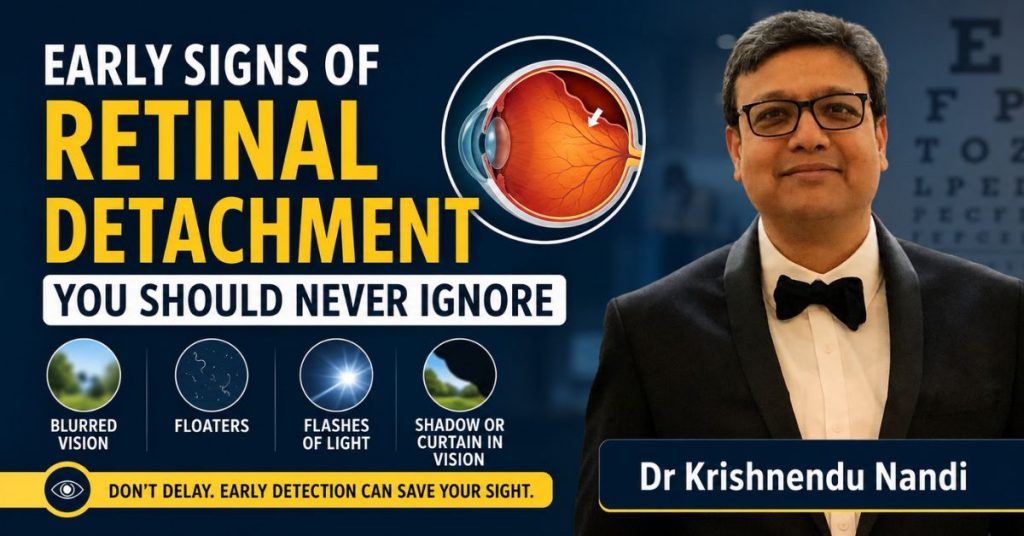
Sometimes, the first symptom of retinal separation is that of floaters. Floaters are small black spots, cobwebs or thin lines that seem to float in front of your eyes. A few floaters are normal but not to be taken for granted. This can mean that the retina is being pulled or torn. It is often referred to as ‘dust’ or ‘insects’ floating in front of the eye.
One other important warning sign is sudden flashes of light, particularly in the corners of your vision. The flashes can sometimes appear as camera flashes or lightning streaks. This occurs when the retina is being pulled or strained. If flashes occur from time to time, it could be a warning sign to visit an eye doctor right away if flashes return repeatedly. Blurred or Distorted Vision means that a person’s vision becomes hazy or unclear. Others may have problems reading or focusing. Sudden changes in vision for no known reason are an important sign and should be followed up with an eye exam.
The most severe symptom is a sense of a black shadow or black curtain in your vision. This typically indicates that there is a more significant retinal separation. The shadow can start at the side, top or bottom and slowly creep over. After that, there is a threat of permanent vision loss, and urgent treatment is required.
Others lose visual acuity in the corners of their eye. This can make everyday activities challenging and can sometimes feel like tunnel vision. This symptom may be progressive, often not recognised initially.
One interesting point is that the majority of retinal detachments don’t hurt. Many people think that eye diseases are painful, but this is not always the case. Vision changes should not be overlooked, even for those who don’t experience pain. The reason why it is important to start treatment right away. Retinal detachment will not heal without intervention. The risk of permanent blindness is greater the longer it is left untreated. Early treatment provides the best opportunity for saving vision, says Dr Krishnendu Nandi. If surgery is performed on time, many times, it can repair the retina..
The treatment will be based on the severity of the condition. In some cases, laser therapy on the retina can be done before a complete retinal detachment happens, if there are small tears. Surgical interventions might be necessary in more severe cases. Surgery, such as a vitrectomy or repair surgery on the retina, can assist in the placement of the retina. The recovery will depend on the early detection and treatment of the condition.
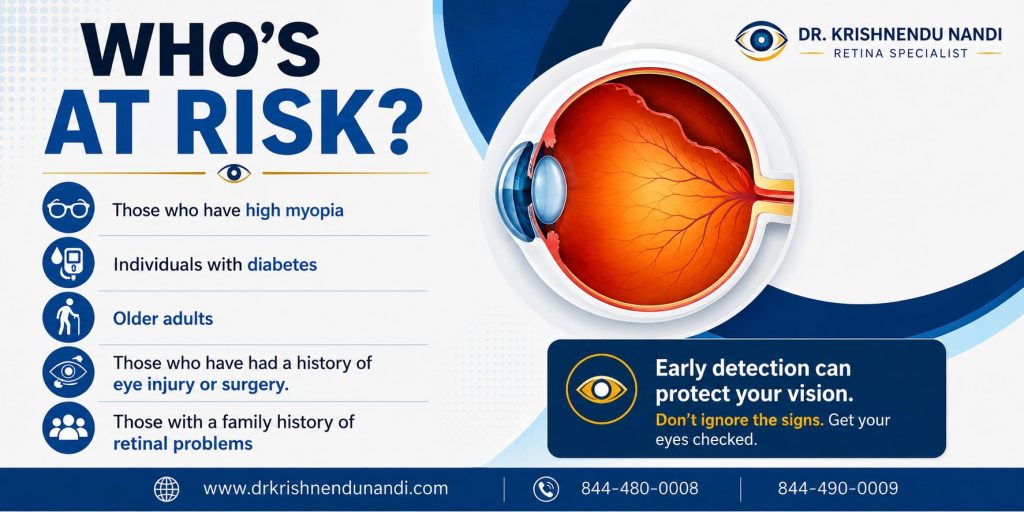
While retinal detachment occurs in anyone, some people are at a greater risk. This includes:
If you fall into any of these, routine eye exams are even more critical, according to Dr Krishnendu Nandi.
Retinal detachment is not always preventable, but you can take steps to decrease your risk:
Most importantly, do not put off going to the doctor if you have any unusual symptoms.
Schedule Your Appointment Today:-
Retinal Detachment is a serious eye disease, but with timely diagnosis, it can make a tremendous difference. Anything that you see as a float, flash, blurred vision or a dark curtain in front of your eyes should never be ignored.
To many people, the symptoms are what look like a small problem, and that’s the reason why they wait too long. But doing so in time can save sight and prevent permanent damage to the eyesight.
Regular eye check-ups and immediate treatment of any sudden vision changes are strongly advised by experts such as Dr Krishnendu Nandi. Eyesight is invaluable, and it’s important to take quick action to maintain your vision for years to come.